
Den Memo shares practical, down-to-earth guidance on practical home office organisation and small-space productivity for uk homes for readers across the UK.
- 0123456789
- Angle Bd Abdelmoumen & rue soumaya, Résidence
- [email protected]
Den Memo shares practical, down-to-earth guidance on practical home office organisation and small-space productivity for uk homes for readers across the UK.
 By James Whitaker
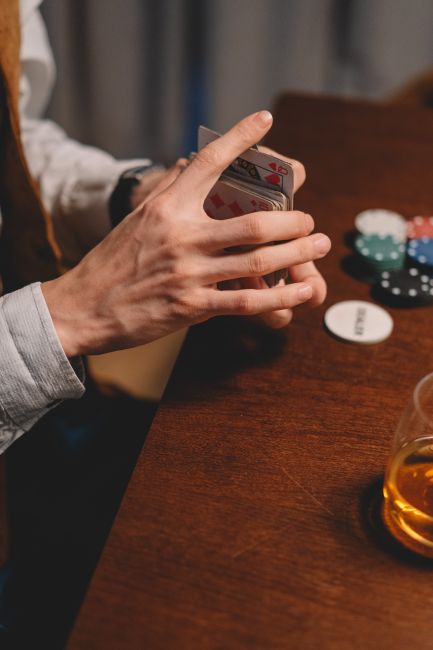
The first time I watched a high-stakes poker stream, I was struck by something the commentator said: "This isn't gambling, this is applied probability." That line has stuck with me through years of following the iGaming space. Because whether you're spinning slots at 3 a.m., grinding micro-stakes cash games, or sweating an accumulator on a Sunday afternoon, the difference between a recreational player and someone who actually understands what they're doing comes down to one thing — treating the game as a system rather than a slot machine of hope. Let's cut through the noise and talk about what genuinely matters.
Everyone talks about Return to Player percentages. A slot with 96% RTP is "better" than one with 94%, right? Not necessarily. RTP is calculated over millions of spins, and it tells you nothing about variance — how the game actually feels moment to moment.
A low-volatility slot like Starburst (96.1% RTP) will trickle small wins at you frequently. A high-volatility monster like Book of Dead or Money Train 3 might go 200 spins without a meaningful hit, then drop a 5,000x multiplier. Same theoretical RTP range, radically different experience. If you have a bankroll of €50, playing a high-volatility game on €1 spins is asking for a 20-minute session. Playing the same amount on 10c spins in a low-volatility game gives you hours of play.
My practical rule: match volatility to the size of your bankroll, not to your mood. A €100 bankroll and a 500x desired win size is fine with high-volatility slots at €0.20. It's reckless at €2.
Poker is the one iGaming vertical where skill truly dominates — but only past a certain point. Let's get specific. If you're playing No-Limit Hold'em at micro-stakes, the two concepts that separate winning players from losing ones are pot odds and range thinking.
Pot odds are simple: if there's €80 in the pot and you must call €20, you're getting 4:1. That means you need at least 20% equity to break even on the call. Flush draws on the flop give you roughly 35% equity against most ranges — easy call. Gutshots often only give you 16% — usually a fold unless implied odds from future streets justify it.
Range thinking is harder. Bad players put opponents on exact hands ("he must have aces"). Good players assign ranges ("he raises preflop with 15% of hands, so on this board that's sets, top pair, and flush draws"). The difference sounds academic — it's not. It's the single biggest reason some players win 5bb/100 hands and others lose 8bb/100. Those comparing choices often turn to nowgoall.it.com.
If you want a concrete starting point, use a preflop chart. Tight-aggressive is boring but effective: raise with the top 18–20% of hands from early position, expand to 40%+ on the button, and fold trash. That alone will make you profitable at micro-stakes.
Here's a fact that gets ignored by 90% of casual bettors: the difference between a 2.0 and a 2.05 decimal odds on a €1,000 bet is €50. Over a season, line shopping alone can flip a breakeven bettor into a winning one.
The vig (or juice, or margin) that bookmakers build into odds is typically 4–8% on a two-way market. If Arsenal to win is priced at 1.95 with one book and 2.05 with another, the implied probabilities differ by about 2.4 percentage points. That is huge. Professional bettors maintain accounts at five or more books purely to compare prices.
A few concrete habits that actually move the needle:
One number worth memorising: at -110 odds (1.91 decimal), you need to win 52.4% of bets just to break even. Most recreational bettors win around 48–50%. Line shopping closes that gap more reliably than any tipster subscription.
Casinos and sportsbooks are not all built equal, and the difference isn't cosmetic. A Malta Gaming Authority (MGA) licence, a UK Gambling Commission licence, or a licence from a reputable jurisdiction like Gibraltar or the Isle of Man means the operator has passed audits, holds customer funds in segregated accounts, and submits to dispute resolution.
Curaçao licences (once a low bar) have improved in recent years, but they remain significantly lighter on player protection. The practical implications are real:
The rule is simple: check the licence footer before depositing. If a casino hides its licensing information or operates under an anonymous holding company, walk away. No bonus is worth that risk.
Every experienced player eventually arrives at the same uncomfortable conclusion: the games are designed with a house edge, and over time that edge wins unless you manage your money with discipline. Bankroll management is not glamorous. It's not a strategy that gets shared on social media. But it's the single variable you control completely.
Concretely:
The psychological truth underneath all of this is that iGaming rewards patience and punishes impulse. Slots, poker, and betting all have their own math, their own rhythms, and their own traps — but the people who last in this space, and occasionally profit from it, are the ones who respect the numbers rather than chase the dopamine.
None of this is designed to stop anyone from playing. Slots are genuinely entertaining, poker is a beautiful strategic puzzle, and betting on sport adds a layer of engagement to games we already love. But engagement without understanding is expensive. Know the volatility before you spin. Know the pot odds before you call. Shop the odds before you stake. Check the licence before you deposit. And above all, protect the bankroll that lets you keep playing next month. The house edge is small but patient. Your discipline has to be smaller and more patient still.


We are not gonna make spamming
